cap

An Elevator Ride with a Nobel Prize Winner

Four days ago, a Nobel prize winner held my hand for an entire conversation. I write this blog as an attempt to process what happened; I am overwhelmed, inspired, and eternally grateful. Here, I will uncover how I was able to make that work and what I learned from our exchange.

A few months back I knew that I will be in the same room with Nobel prize winner Muhammad Yunus, a champion of social enterprise and micro-finance and a Vanderbilt University alumnus. That is because I had a great opportunity of being selected out of over 25,000 applicants from 190+ countries to attend the 10th anniversary of One Young World (OYW), a gathering of 2000+ young leaders from around the world who are selected to develop solutions to the globe’s most pressing issues.

I had my eyes set on OYW since last year when I applied but did not make it. This year, I received 2 scholarship rejections but made it through the third. YES! I was thrilled to learn that the list of phenomenal speakers included Founder of the Virgin Group, Sir Richard Branson; First Lady of Colombia, María Juliana Ruiz, and CEO of Coca-Cola, James Quincey as well as surprise guests like JK Rowling and Prince Harry. And of course, Muhammed Yunus was amongst the speakers and I was especially ecstatic to meet him as my university’s alumnus, my center’s founding inspiration and my social enterprise role model. 

As a student leader at a Vanderbilt University social enterprise center that was inspired by Yunus’ work of serving the poorest of the poor, I had a special affinity towards Professor Yunus and I simply had to make meeting him possible! And ah, did I just meet with Yunus? Here are three main themes within my approach that enabled me to meet Professor Yunus.

  1. Take different approaches. I reached out to multiple Yunus Center emails and accounts. I even slid into his Instagram DMs and got ghosted. After a little over 15 email correspondences with multiple contacts including 2 rejection emails, it finally worked! My mentor, Mario Avila, directed me to the Executive Director of Yunus Centre who connected me with the Centre’s Assistant General Manager. This is the person who put me on Professor Yunus’ calendar!
  2. Make your ask as easy as possible. Since we were both going to be at the same conference anyway, asking for a short meeting with Professor Yunus was a simple ask to be fulfilled. Being flexible and patient around any changes are key to making this feasible.
  3. Be genuinely kind. At the end of the day, you are asking for a favor and the other person is not obliged to respond. In fact, how would you expect their schedule to be? Pretty hectic, right? I was not getting responses and I had to follow-up multiple times. For that, I used an excited tone and reaffirmed my gratitude for those who were facilitating the meeting.

I was then counting the days until our meeting. I packed my carryon with sweaters and overpacked my heart with excitement. On the opening day of the conference, I was lucky to randomly run into the Bangladeshi delegation. We were all dressed in our national dresses as we walked to the iconic Royal Albert Hall for the opening ceremony and conversed about social change. I was surprised to know that the attendance of those 10 inspirational Bangladeshi change makers was made possible because of Professor Yunus. He generously gave away his OYW honorarium to sponsor them based on his commitment to developing young leaders who are affecting change. The delegation was accompanied by a Yunus Centre coordinator, Urmee Hossain, who choked with emotions when she described working with Professor Yunus and how supportive, humble and generous of a leader she found him to be. Additionally, one of the Bangladeshi delegates, KM Rahat, told me about the humility that drives Yunus’ life including his accommodation and food.
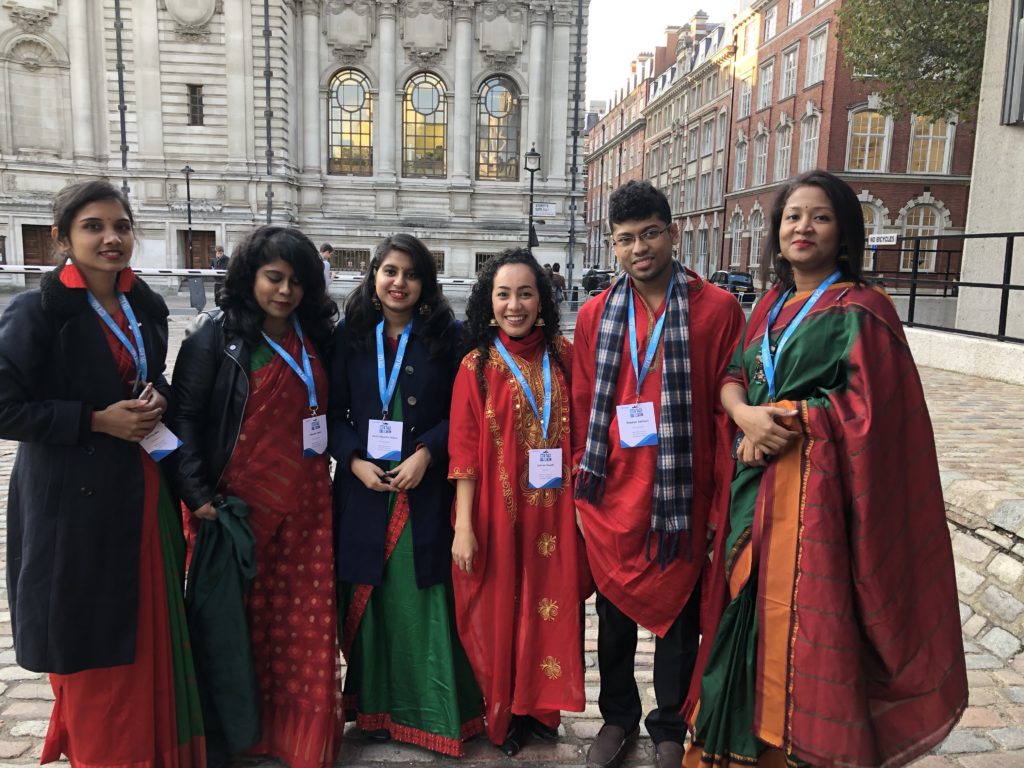
With the beautiful Bangladeshi delegation

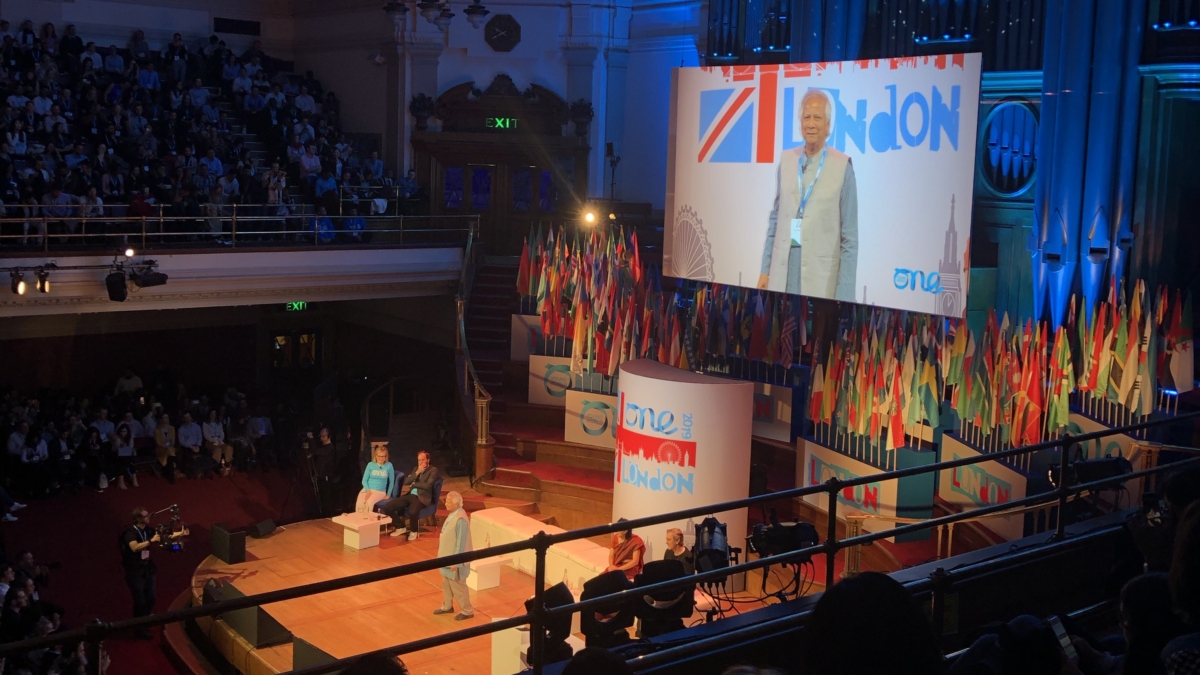
On the summit’s third day, Professor Yunus was presented to stage by the Executive Director of Yunus Centre, Lamiya Morshed and Co-founder of the Grameen Creative Lab in Germany, Hans Reitz. Together, the two of them painted a powerful image of Yunus as an astonishing achiever who tackles challenging issues while being joyful in the face of problems. Later on, the 79-year-old incredible social change maker urged us OYW attendees not to be afraid of dreaming big when we address social issues. It is not surprising that his speech was the first to receive a standing ovation for his humble personality, inspiring stage command and humorous delivery. 

Here comes my “Dear Diary, I met Professor Yunus” moment! I was scheduled to meet Professor Yunus on the summit’s third day, October 24th of 2019 at 6:30 PM. I had an image of Professor Yunus that was created by the description of the Bangladeshi delegation and my university professors. After meeting him, I am reassured that their described image was not an exaggeration. He was incredibly humble and delightfully joyful. His smile never escaped his face. Throughout our brief encounter on the fourth floor of Queen Elizabeth II hall, Professor Yunus was holding my arm and answering my modest questions. What’s next for this Nobel prize winner? He aspires to inspire more young leaders of driving social change. Professor Yunus’ companion, the Managing Director of Yunus + You The YY Foundation soon noted that they were scheduled to leave and I was sad that our time came to an end. Those were long, unfortunate 3 seconds until Professor Yunus cheerfully insisted “come with us!”, while he continued to hold my arm to the elevator. He made me feel like we have known each other for years. I am secretly (not so secretly now) thankful that I did not break into tears by how touched and humbled with the kindness I received from him. Here are three lessons that Professor Yunus inspires:

A “Dear Diary” Moment!
  1. Challenge Conventional Ways. The very idea of Grameen Bank’s mirco-finance is based on going against conventional banking approaches. As the Banker to the Poor, Yunus’ Grameen lends the poor instead of the rich, supports women with no collateral and is owned by the poor borrowers, not the bank. Sometimes not knowing something is a blessing because it frees us from being ruled by the way it is ordinarily done. When asked about how he came up with the idea of Grameen Bank, Professor Yunus famously answered saying that he looked at how banking is done and did exactly the opposite. At OYW, Yunus advised us to learn how something is done yet “don’t follow it, question it”.
  2. Don’t Look For Money, Look For Problems – Yunus believes in making businesses that solve problems, and his motivation comes from serving the base of society instead of being driven by the bottom line as well as serving human needs rather than accumulating wealth. This drive made him set more than 60 companies in motion. Yunus says “every time I see a problem, I create a business to solve it”. If you can’t think of a problem to solve, Yunus points to the UN’s 17 Sustainable Development Goals for ideas. For Yunus, he looks at three main problems through which he advocates for a world of three zeros: zero poverty, zero unemployment, and zero net carbon emissions.
  3. Imagine Making the Impossible Possible – Yunus is a visionary leader who looks decades ahead in time. During his OYW speech, he humorously said: Why don’t you use your imaginations? It’s free! Yunus presses for thinking of life 50 years from now and imagining that. Many of the technologies and procedures that we have today were not even imaginable a few centuries back. Instead of being a spectator of the impossible turning into possible, Yunus teaches us to take the lead into challenging the impossible. In other words, you are missing a chance by not tackling the impossible. Imagine the world that you want to live in and it will happen. 

I am grateful for all the compassionate humans who supported me to have this one on one meeting with a social change role model. Thank you to Kathleen Fuchs and Corbette Doyle for supporting my scholarship application, Mario Avila for pointing me towards the right connections, Rangaraj Ramanujam for encouraging me to believe that it is possible, Lamiya Morshed; Tanbirul Islam, Dominique Dauster and Urmee Hossain who made this meeting possible. Lastly, thanks to One Young World for awarding me the first flagship “Leading Scholarship” out of 25,000 global applicants. I am overwhelmed with kindness.

Finally, my last takeaway from meeting Professor Yunus is to lead with heart and be a compassionate leader who puts people in the heart of every solution. Professor Yunus teaches us to hold people’s hands and thoughtfully support their growth journey. In the end, an elevator ride with a Nobel prize winner is possible. The question is: Who do you want to ride with? And more importantly, what would you learn from it?
30C78tFlT4CAqpQ7587ROA

What do you call an Ecosystem Builder?

As a child, I loved Spider-Man. Fine, I still have a thing for Spidy. Common, “with great power comes great responsibility”? How can one not absolutely admire that? I always gravitated towards the idea that superheroes serve their communities. Growing up in an entrepreneurial community, Ecosystem Builders took that same community-serving role in my mind. When I learned about ESHIP summit which convenes ecosystem builders, I obviously jumped at the opportunity. Now, I don’t look at ecosystem building the same way.

Ecosystem Building Doesn’t Exist.

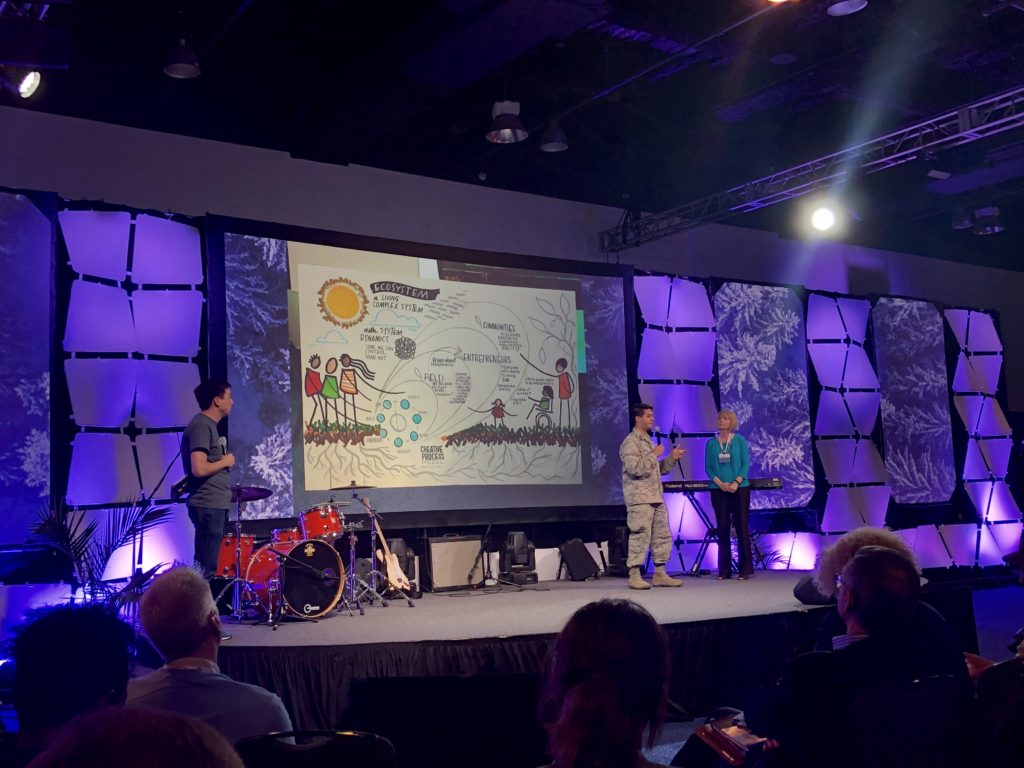
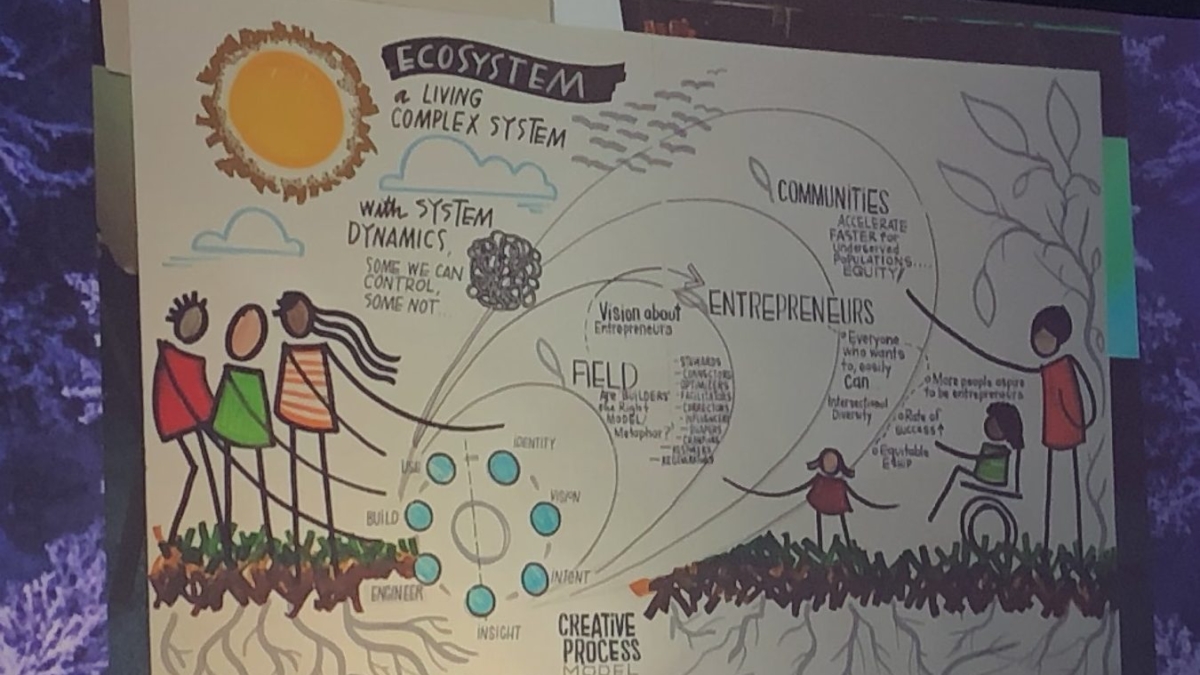
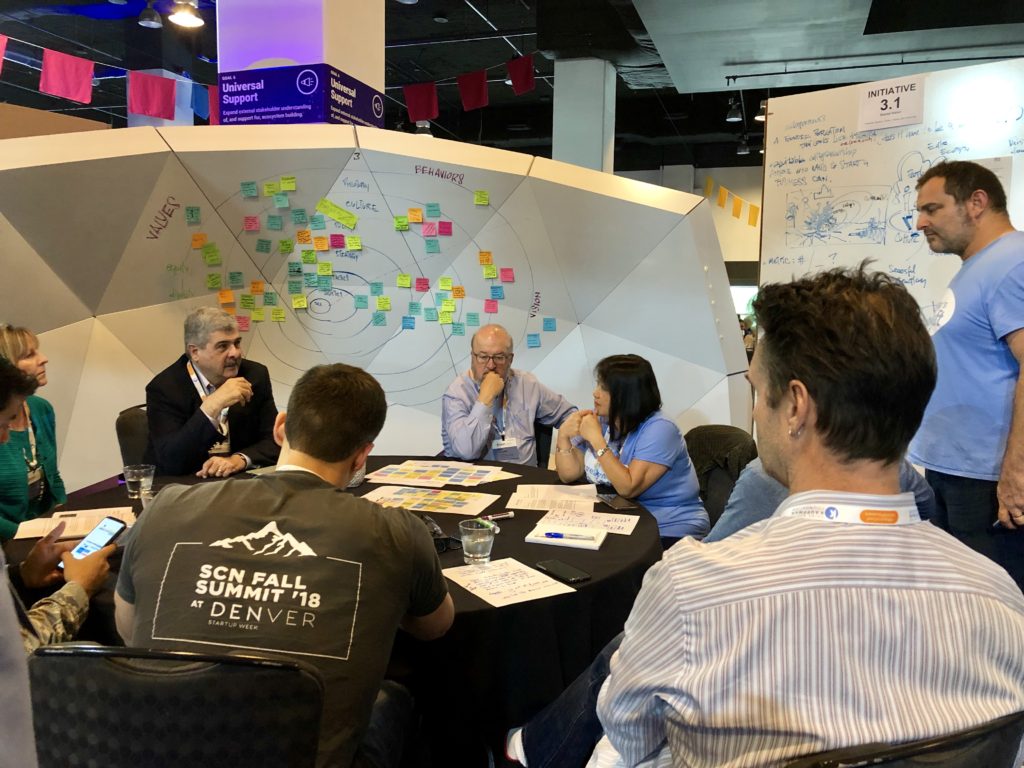
Surrounded by 450 “ecosystem builders” in a conference around “ecosystem building”, I learned that Ecosystem Building doesn’t exist. Shocking, ha? At ESHIP, a group that was discussing having a Shared Vision about ecosystem building grabbed my attention. My inner architect was swayed by the visuals this group had, but what was more fascinating to me was the conversations behind those graphics.

If ecosystems are living environments that exist without “builders”, then where did the term “ecosystem building” come from? And more importantly, if entrepreneurial ecosystems exist anyway, then are we ecosystem “builders”? I mean, yes, we do catalyze/ facilitate/ contribute to/ support ecosystems, but we don’t build them. Why does this matter anyway? What’s in a name, right? Well, in order for us to have a Shared Vision, we need a unified understanding about the role of ecosystem builders. Moreover, the name affects our mental model and perception around ecosystem building, and consequently the actions we take towards them.

Let’s NOT Create Jobs.

It is important to not only reframe the name we give Ecosystem Builders, but also the role they play. There is emphasis on job creation, but that’s easy. Millions of jobs can be created by demolishing every restaurant and then rebuilding them. However, does that create value? Absolutely not. Jobs are created organically when entrepreneurs create value. With that; our focus should be on creating value not jobs.

“Ecosystem Building is a community sport”

Creating ecosystem-wide value can’t be done alone. It takes “mass collaboration” across a network of contributors. This leads me to see the role of ecosystems builders as the enablers of those collaborations that make it possible for entrepreneurship to flourish.

There is no wonder many ecosystem builders don’t realize that they are ones. We need a better understanding to the role ecosystem building plays and a name that frames that role in the right light. With a great responsibility of creating ecosystem value, I’ll call them your friendly neighborhood superheroes.


References: 

https://fee.org/articles/creating-jobs-versus-creating-value/

https://eshipsummit2019.kauffman.org

svdM9VkeQ7uE0GDvaaYPUg

A Boarding Pass to Social Change

A Boarding Pass to Social Change

Where can a flight across knowledge borders of basic economics take you? This semester I was welcomed aboard Vanderbilt flight, MGT 6552, from Owen Graduate School of Management to a better understanding of social impact and the social economy. Where did that take my perceptions about poverty and its alleviation? I wish it was plain and simple, but I will try to capture the eye-bird takeaways. 

A Journey of Inspiration

The MGT 6552 class (or Project Pyramid) is an interdisciplinary course that flies at the speed of 3000 perspectives per class. The class facilitates opportunities to explore various perspectives on enterprise and innovation for poverty alleviation. As a passenger on this learning experience, I had the windows to examine the role of social enterprises in poverty alleviation through classroom discussions, guest speakers lectures, an immersive onsite experience, interactions with International partners, and working within a diverse multidisciplinary team.

What’s Social Enterprise Anyway? 

Throughout 16 weeks of class, our class captains Bart Vector, Mario Avila, and Jim Schorr took us through a nonstop journey to a sweet spot between social impact and business value. As a part-social-part-business typology, social enterprise blends the traditional boundaries between  non-profits and the private sector. Unlike nonprofits, social enterprises rely on sustainable revenue instead of relying on funding in the form of donations; and unlike for-profits, social enterprises’ main motivation is social impact. In other words, social entrepreneurs balance the tension between carrying out a social mission and being sustainably profitable.

To elaborate, social enterprises exist to achieve a social mission like poverty alleviation, providing education access to the poor, resolving healthcare gaps in underserved areas. Nonetheless, this new social enterprise phenomenon is fuzzy; what is considered a social issue? Where is the balancing point between social and business? How deep down the Bottom of the Pyramid do we need to go to be considered social? The debate is endless and the term remains vague, but what is evident is that these small organizations are seeking big systematic changes.  

Small Organizations, Big Questions

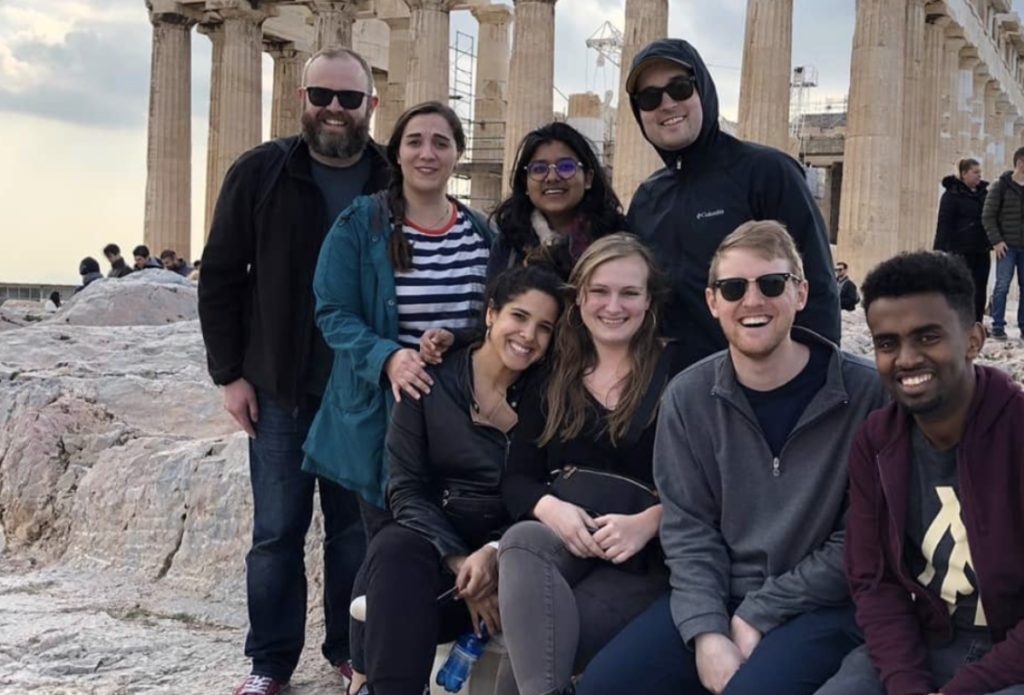
My team and I worked with WELCOMMON, a social cooperative in Athens that supports refugee populations with an ambition of integrating them into the Greek society and empowering them to be self-sufficient. Working with WELCOMMON showed us how social enterprises can be the most forceful social-change agents. As you might know, the Greek economy was already fragile when the influx of refugees and migrants exacerbated the devastating economic effects. WELCOMMON is determinedly working to affect a system-level impact on Greek’s stressed economy by addressing the refugee crisis. We were influenced by the way this small organization was asking big questions of systems change, and we were challenged in supporting their vision to build a more systematic and scalable business while remaining mission-focused and customer-centric.

Social Enterprise Consulting

Within the Project Pyramid class we were a total of 10 teams working with 9 social enterprises across 4 countries both remotely and onsite. I had a unique opportunity of working with our partner organization, WELCOMMON, in Greece while exploring alternative business models in Guatemala. Before taking off with our clients, we learned about social enterprise consulting and how to work with clients using frameworks like the Social Business Model Canvas, Logic Modeling, and the Answer First Framework. We were encouraged to take a human-centered approach in collaborating with our partners to craft profit-and-purpose strategies.

Business as a Second Language

As consultants to WELCOMMON, we were challenged by a language barrier. This was not limited to English language fluency of WELCOMMON’s staff and volunteers team. It was us too! We were a multidisciplinary team coming from different schools and disciplines; Economics, Higher Education, Leadership and Organizational Performance, and MBA. We recognized, early on, the importance of harnessing the best of our talents and understanding the “language” of other schools of thought.

It was a bumpy ride at first, but keying on everyone’s unique strengths helped us to have a common understanding and frame our arguments to reach the right strategic decisions for our partner. Nonetheless, we faced the most turbulence in communicating our solutions to the WELCOMMON team. The challenge was translating complex business strategies in simple messages that can move our stakeholders to action. Tough! More than our fancy slide decks and elaborate business recommendations, what helped us the most was asking first and seeking to understand before being understood.

In the end, the Project Pyramid and our immersive experience with our respective social enterprise partners showed us how social enterprise is a gateway to bigger systematic changes. Regardless of the social and economic baggage, social enterprise will carry on pursuing their missions while keeping a scalable business model. In working with social ventures, we are ought to be respective of their missions and speak their language to land on practical recommendations. Finally, social enterprise consulting is a flight I enjoyed on boarding 🙂 – Thank you, Project Pyramid team.

NYC.001

Social Entrepreneurs Don’t Give the Poor

I was escaping New York’s winter with a hot cup of latte. I picked up my phone to check my flight timing for the dozenth time; I was traveling alone and I couldn’t afford being too latte. Suddenly, the empty seat across my table was filled. Puzzled by this event, and a question if I should offer this homeless person sitting on my table a drink, my train of thought was interrupted by loud coughs of the homeless person. A lady in red across the coffeeshop waved at me with troubled eyes signaling the availability of an empty seat next to her. I was unsettled because of the coughs, so I picked up my baggage and changed seats. 

The lady whispered to me explaining why she encouraged me to change my table “We don’t judge, but she might be sick; she was coughing”. From my new seat, I was able to observe the encounter of the coffeeshop staff forcing the homeless person to leave and facing resistance. The homeless person eventually left the coffeeshop to battle the ice-cold winter of the big city. I felt momentarily coldhearted. The lady in red turned back to me, “You know, it’s their fault for being in such situation. You need to work hard in this life”. I replied with an uneasy smile. I was wondering: is it really their fault though?

I checked the time once more. If I miss the sub, I’ll miss the air-train and miss my flight, and I can’t afford that. Scarcity in time, money, affection or anything else consumes cognitive resources like memory and attention and leads to cognitive deficits. My condition of minor scarcity was not comparable to a homeless person’s situation, but the psychology behind this is the same. The psychology of scarcity suggests that being in a situation of scarcity leads to cognitive and behavioral responses that are counterintuitive to how the brain works. We place higher value on whatever is scarce. For example, a person living in scarcity will prioritize short-term gains to satisfy that scarcity right away. Being in poverty affects cognition functions and leads to decisions that exacerbate conditions of poverty – a vicious cycle. This insinuates that being in poverty is not only a result of being poor but also a cause for being poor. To alleviate poverty, this cycle all together must end. To alleviate poverty, we need to…. Alleviate poverty?

Giving a poor person a fashionable new pair of shoes, although groovy, does not necessarily help solve their poverty problem. We do good with good intentions. It feels good. However, this good is doing more harm. To our defense, we are socialized into thinking that the poor need our help. Even so, not only do our short-term solutions fail to contribute to poverty alleviation, they also exacerbate its repercussions. Keeping the poor in the vicious cycle of seeking short-term answers limits them from escaping poverty. It also gives birth to generations of poor people who believe that receiving aid is the only way to get out of poverty. The solution lies in thinking long-term and empowering the poor to be self-sufficient. Moreover, the way we perceive poverty alleviation requires a paradigm shift. We need to move from doing the kind of good that just feels good to the kind that actually makes lasting results – the kind that eradicates poverty.

Social entrepreneurship has proven to be the key alleviator of poverty when it empowers populations to solve their own challenges. The innovation in social enterprises addresses poverty at its grassroots levels while applying novel approaches to create social value. This enabled social enterprises to succeed in areas where governments have failed. With this instrumental role, social enterprises need to be driven by their missions first and foremost. If well-intentioned actions can lead to negative implications, then evaluating potential impact is essential to achieve social change. Modeling for both the long and short-term using frameworks like Stanford Business’ Impact Compass, The Centre for Social Impact’s guide to social impact measurement and the World Bank’s Measuring Impact Framework help in assessing impact (or the lack of it) as well as maximizing its potential. Different frameworks are applicable to distinct problems and contexts; no framework fits all. Ultimately, impact is the GPS towards any social good.

References: 

DSC_1053

Decision Impossible

Life is one big poker game in which we don’t have all the facts to place our decisions (aka bets). Our bets include deciding on a job offer, moving cities, buying a car, or even ordering Chinese instead of Italian. Are you a bias decision-maker? Sorry to break it to you, but you probably are! How can you overcome bias and become a better bettor?

Bias Bias Bias

We all have some sort of bias, and sometimes we even know it. Have you ever thought “Ugh, I should’ve seen this coming?” – that’s hindsight bias right there. Hindsight bias explains individuals’ inclination to believe that past events are predictable (example: I should have known that this will happen). This bias also describes individuals’ tendency to deduce, after the occurrence of an event, that their projection of the outcome was more accurate than it actually was (example: I knew for sure that this will happen. <— oh, no, you did not, you little hindsight bias!).

We are also subject to resulting. When the outcomes of our decisions are unsatisfactory, we are inclined to view our decisions themselves as inadequate. We tend to mistake the quality of the outcome with the quality of the decision itself. Such cognitive traps lead to assuming causation when there is only correlation, and cherry-picking data.

Redefining “Wrong”

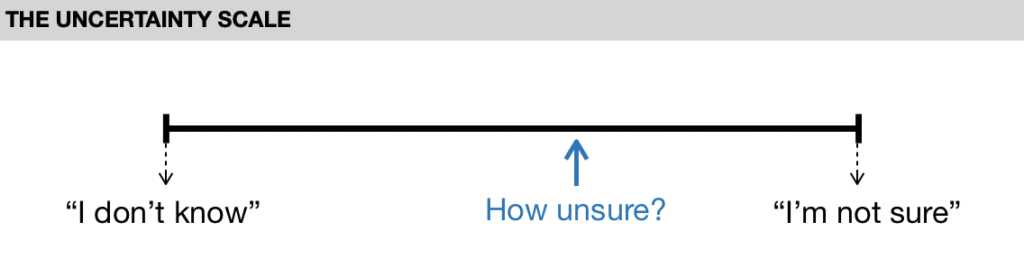
Decisions are not always black or white; uncertainty paints a wide range of grey in between – 50 shades, maybe more. It is inaccurate to think that a decision is ALWAYS right and another is ALWAYS wrong. This way of thinking can transform our mindsets from (“I don’t know” vs “I know”) to (“I don’t know” vs “I’m not sure”). This astute perspective shift enables us to ask “how unsure?”. The answer is rarely 0 or 100. Instead, how unsure you are slides between the two extremes in what I like to call an Uncertainty Scale. The answer to “how unsure?” helps us make an informative decision in placing our bets.

What are you betting on today? Ah, tough call. Slide the Uncertainty Scale and figure out how unsure and hopefully you decision-making will not be that impossible!

fullsizeoutput_1281

Metrics When Missions Matter

The look of unease on his face turned to exhilaration. “Zahraa will take over the report?” He was eager to hear a Yes. Undoubtedly, compiling data, tracking and reporting takes much effort; my colleague’s relief was understandable. What I did not expect, however, is that the report itself kept changing every month – quite concerning, to say the least! Yet again, that is understandable for nonprofits where profitability metrics and purely economic terms do not reflect the mission. Assigning metrics for nonprofits is certainly a challenging task. Given that nonprofits’ missions are vague and that their outcomes are long-term, how can these nonprofits measure their success?

Mission Impossible?

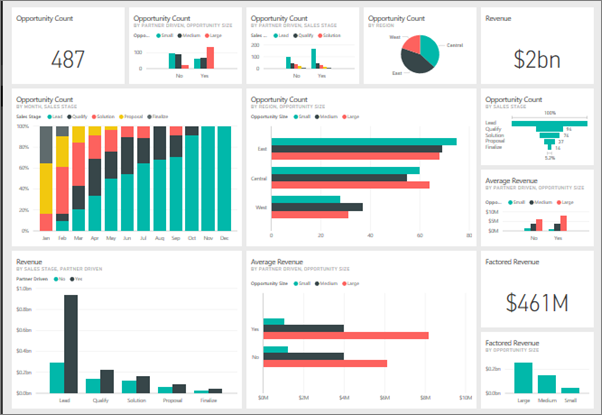
Throughout my previous experiences with non-profits, I often found myself creating or overlooking dashboards. Although building an organizational or departmental tracking tool can be complicated itself, it isn’t the most concerning part of performance tracking. Establishing the right metrics is foundational. For corporates, measuring success is simply linked to profits. Measuring success in nonprofits is far more difficult. Baring in mind the diversity of nonprofits’ sectors and missions, no single performance measure will work for all of them. How can we measure the success of an organization like the Red Cross whose mission of alleviating human suffering? How can we gauge progress towards such an overarching mission?

Link Your Metrics to Your Mission

Nonprofits often turn to the number of beneficiaries or members as a success metric. But does that number actually achieve the mission? In the case of the Red Cross for example, the number of volunteers is a leading indicator that does not imply the organization’s mission to “alleviate human suffering”. McKinsey&Co suggests creating quantifiable metrics stemmed from the mission by investing in research that shows the viability of specific methods, or by developing microlevel goals that denote a larger scale success. It is crucial to move beyond merely measuring activities to actually measuring the mission’s impact. That is workable by defining the key metrics that best measure what is most important to your mission: Does it make a difference? Does it measure your success in achieving your mission?

A Matter of What Matters

There are several pragmatic approaches to quantifying success like The Family of Measures Model, and it is fairly simple to define metrics. A deeper look to examine whether or not we are measuring what matters or not is necessary. It’s too easy to slip into vanity metrics. The 3 “A”s of good metrics can help in guard your metrics agains vanity. Are your metrics actionable, accessible and auditable?

Triple “A” Metrics

ACTIONABLE

Vanity metrics make us look so damn good! But, they certainly do not indicate which direction we need to take. We have 500,000 volunteers working with us, well great! What action can we take based on this number? To ensure that our metrics are actionable, it’s advisable to use comparative metrics, and combine lead and lag metrics.

1- Use comparative metrics: Think of ratios and benchmarks. Instead of the number of volunteers, we can measure the percentage of growth (or decline) in number of volunteers. Those metrics allow us to identify what we did well or what needs to change. Similarly, the number of volunteers can be benchmarked and compared to other organizations which helps us to vicariously learn from their practices.

2- Combine lead & lag metrics:

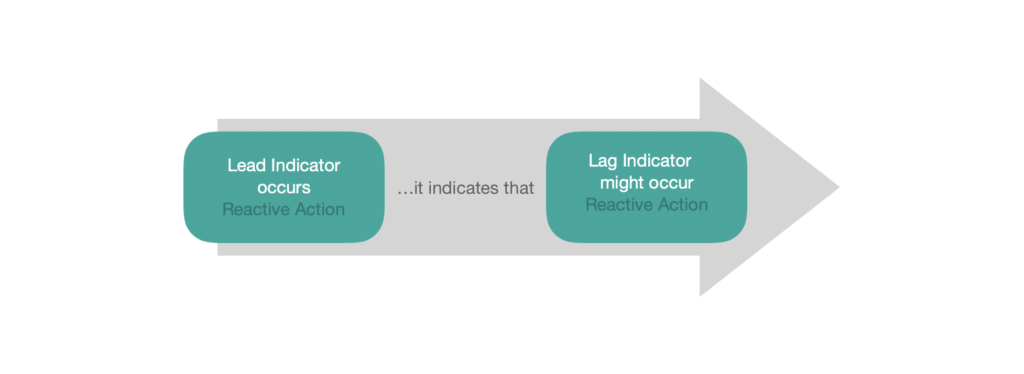
Lag indicators are the results you get (e.g. number of program graduates placed in quality jobs, number of successful businesses launched). Whereas lead indicators are actions you take (e.g. number of job interviews trainees are sent on). To come full circle, you need to measure both lead and lag indicators.

ACCESSIBLE

You have a great Cost Per Dollar Raise of $0.2 this year – Great! This might be important for your board to hear, but not to your donors. Your donors will probably care more about the number of beneficiaries you reached or the level of impact you had on those. When you’re thinking of metrics, keep your audience and objectives in mind. Are you encouraging donors to donate? Are you showcasing success to your board? Are you motivating your team members? Your metrics need to speak the language of your stakeholder.

AUDITABLE

Auditable metrics are verifiable and anyone in your team can calculate and reproduce them. This means that those metrics don’t necessitate multiple steps and calculations to arrive at the results. They provide transparency, and present data in a simple straightforward way.

Measuring and reporting takes effort – effort that is more rewarding if it was put into things that count, ones which direct us towards our organizational goals. To test how actionable, accessible and audit-able your metric is, answer these questions: Does this metric change the way we behave? Is it understandable by this specific stakeholder? Is it easy to arrive at? Guard your organization against vanity metrics; measure what matters.

References:

https://hbr.org/2015/07/what-to-measure-if-youre-mission-driven

https://www.mckinsey.com/industries/social-sector/our-insights/measuring-what-matters-in-nonprofits#0

https://www.onstartups.com/tabid/3339/bid/96738/Measuring-What-Matters-How-To-Pick-A-Good-Metric.aspx

http://jem9.com/3-metrics/

https://www.plentyconsulting.com/news/this-is-how-we-do-it-lag-lead-indicators

Bz07-Bahrain

Is Your Economy Immune to Flu?

Do you remember the last time you got the flu? Then you must recall your runny nose, sore throat, and your fatigued body. Last week I had the flu and it made me think: My whole body is sick, not just one part. Isn’t it amazing how the whole body is interconnected? It’s a holistic organism, a system, not just independent organs and parts. As I sneezed, I thought of the responses of my immune system to the flu. But it’s not just my immune system, the human body is made of intertwined systems: circulatory, digestive, respiratory, and other connected systems within a system. When thinking expands to take into consideration a larger number of interactions and dynamic complexity, this is described as Systems Thinking in Peter Senge’s Fifth Discipline. Systems Thinking describes the world in a more holistic manner based on models of systems. It looks at a bigger picture instead of looking at small parts of a system. In other words, Systems Thinking examines a larger number of interactions and dynamic complexities. Just like the human body, the economy is a system. Several years back, the Bahraini economy had the flu and the government prescribed a Systems Thinking approach.

A Sneezing Economy

As an island rich in oil and located at a midpoint between the East and the West, the black gold (oil) was a cornerstone to Bahrain’s economic performance. As the country prospered, its strong oil revenues were redistributed to offer citizen jobs in the public sector. Nonetheless, Bahrain was facing problems with unemployment. How can an oil-rich country face problems of unemployment? Keeping in mind that a profuse number of public-sector jobs were created by redistributing the oil revenues. What’s the problem then? Looking deeper, those jobs were low-wage ones and as a result, the kingdom faced a shortage of quality employment and appropriate skills. In fact, business preferred foreign workers over Bahrainis because expats costed a lot less compared to Bahrainis. In order for the island kingdom to sustain its economic advancement, there needed to be a shift from being public-sector-dependent to becoming private-sector-driven. After all, creating a non-oil economy is vital since diversified economies tend to achieve faster growth. Since the private sector was crippled and foreign-reliant, Bahrain’s economy had a little more than just a seasonal flu!

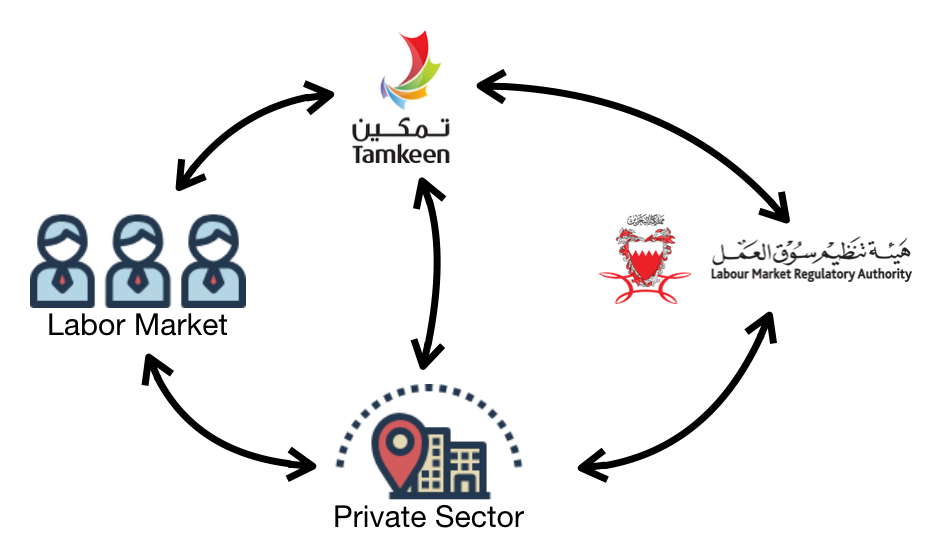
Conscious of the implications of an unhealthy economy, Bahrain’s government was in search for a cure. To do that successfully, there was a need to reshape the whole economy which was driven by the oil sector for centuries. This entailed changes of structures and policies. Therefore, the government launched its ambitious Vision 2030 as a blue print for national reform and a nation-wide “Shared Vision”. The vision informed, and continues to inform, every aspect of the Kingdom’s path towards prosperity. Today, every government agency is working towards Vision 2030. Several state bodies were reshaped and/or expanded their role to facilitate a boost in the economy. Nevertheless, there was a need for an extensive collaboration between the private sector and the public sector which lead to legislating thorough laws that directly support private-sector development. As Systems Thinking demands, medicating individual organs does not promise the health of the overall ecosystem. To explain further, this article will refer to five stakeholders within the ecosystem: LMRA, Tamkeen, EDB, the labour market and, needless to say, the private sector.

Ecosystem Drivers

Bahrain’s Labour Market was facing a need to raise the middle class of Bahrain who enjoy good living standards through productivity and high-wage jobs. Locals needed to be incorporated into private sector positions, whereas business owners preferred other hires.

The Labour Market Regulatory Authority (LMRA) was established with a corporate nature and a main aim of drafting and implementing strategies for the Labour Market.  We will focus on enacting fees on foreign labour. Those fees that are applied to the private sector were then reinjected into the private sector through Tamkeen.


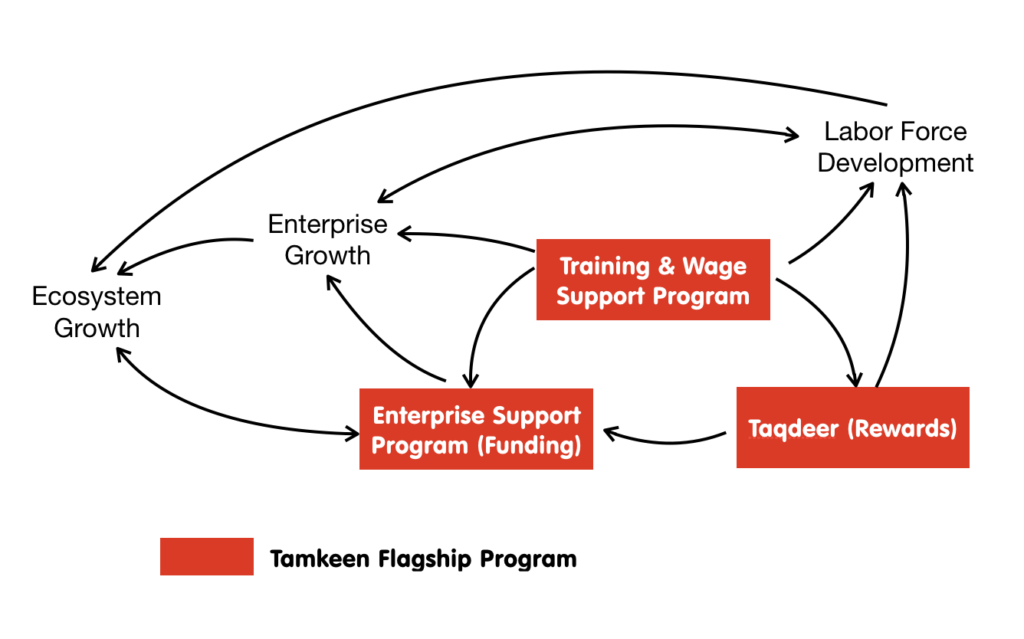
Tamkeen was established in 2006 to support the private sector and make it the main driver of the economy. Tamkeen’s budget comes from the LMRA and is utilized across it portfolio to serve two primary objectives: fostering the development of enterprises and enhancing the productivity of the national workforce. Tamkeen drives the labour market by advancing the skills of the national workforce and making them a more favorable option to employers. In the same time, it drives the growth of enterprises through its funds and acceleration opportunities. The funds themselves are a sub-system of the system, because they reward the companies who continue to grow in their nationalization quotas.

The Economic Development Board (EDB) encourages investments in selected sectors beyond the financial sector to diversify the non-oil economic growth. While Tamkeen supports enterprises once they are established in Bahrain, EDB ensure attracting investment from abroad.

The mentioned ecosystem drivers, amongst others, collectively learn together and feed into each other, what is called in Senge’s words “Team Learning”. Multi-disciplinary perspectives from the ecosystem drivers map the system. All stakeholders are interdependent and affect the organism as a whole, a perfect model of Senge’s Systems Thinking.

Power of the System

The system applied by the government of Bahrain and through the collaboration of all stakeholders changed the narrative. The Systems Thinking approach lead to creating value-added jobs, advancing the talent pool and increasing the market performance. Today, Bahrain is one of the fastest growing financial centers, and the Bahraini dinar is the second highest valued currency in the world. If your ecosystem has the flu, then your ecosystem has the flu; not just a single organ(ization). Bahrain’s ecosystem provides an example that taking a Systems Thinking approach will “bless you”.

Waffle Bake Sale

Don’t make an Awful Choice, Make A Waffle Choice

7313 miles away from home, 8 hours time difference, and a long 27 hours flight across continents I arrived to my final destination, Vanderbilt University. I came here filled with aspirations for an enlightening educational journey. After all, Vanderbilt prides itself for being ranked amongst the top universities in the country with a notable 14th place in the United States. “Expecting the exceptional” was expectable. However, to my surprise, my first assignment in the United States’ 7th best Graduate School of Education was a bake sale! WHAT? Is this what I crossed continents for? I am doing a bake sale for GRAD SCHOOL? I was both astounded and amused.

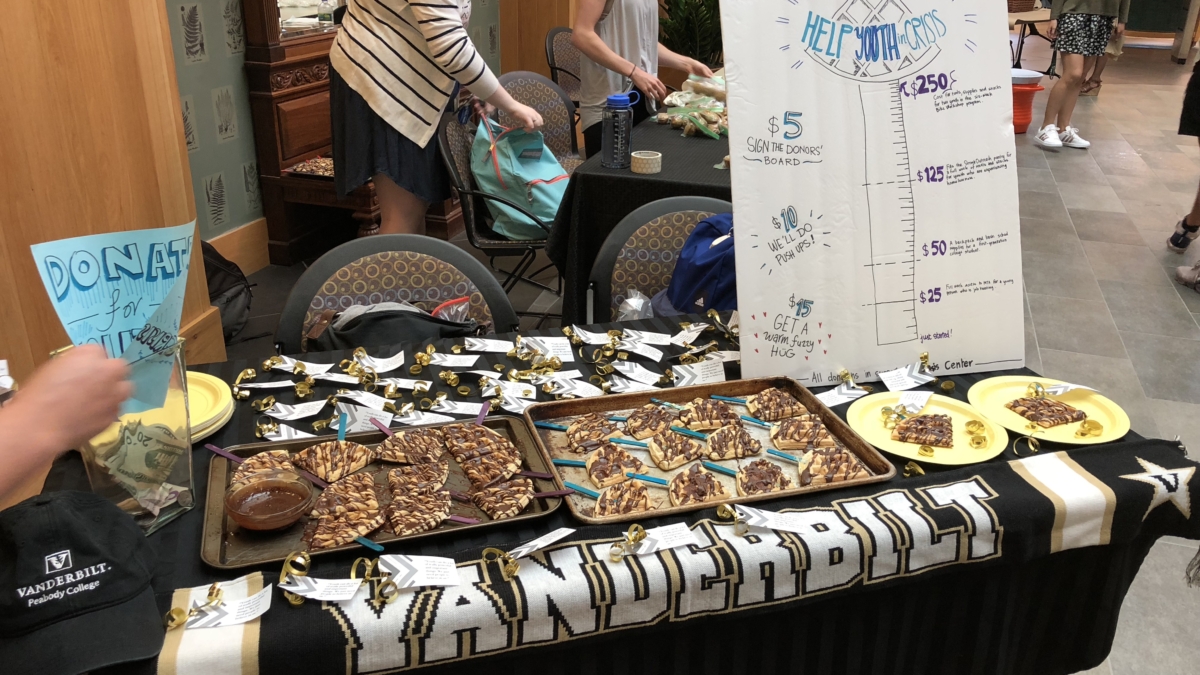
The class was divided into teams to have a charitable bake sale, and the class collectively decided that the winning team will be determined based on profit margin. I was teamed up with three other students and we each came up with a product and a budget for the Bake Sale assignment. Not having been exposed to a Bake Sale in my life, I had the advantage of ignorance! I was not limited to the typical muffins, brownies and cupcakes, simply because I didn’t know any better! My proposed product was a Waffle Pop – an arguably delicious, chocolate-dripping, waffle on a stick. The team was quick to jump on the idea after sort of objectively assessing how it can appeal to undergrad students and standout in relation to the other 5 teams’ products. We also selected a charity that the bake sale profits will go to. Let me give you a hindsight insight and tell you that all those early stage decisions played a key role in our bake sale results, which leads to my first insight: [ Insight 1: Make the right choice ]

Later on, each of my team members came up with a waffle budget. With some background from the class readings, that was a piece of… waffle. The class readings included several articles and books like The Accounting Game: Basic Accounting Fresh from the Lemonade Stand (hence, the Bake Sale assignment), Financial Intelligence for Entrepreneurs, and Running Lean: Iterate from Plan A to a Plan That Works, which gave us a holistic understanding of bigger-picture business strategy and financing. Comparing our budgets, we were able to identify the cheapest ingredients. Everyone loves a bueno, bonito, y barato bargain, right? Well honestly, we were not bothered to run across different supermarkets to get the ingredients, but after running a quick analysis we had found that minor cost differences can immensely affect our profit margin. Our choice of waffle mix will also determine how many waffle pops we will be able to make and consequently our revenue. Using numerical data and objective decision matrices helped us to refine our product in comparison to our overall goal – win the competition by having the highest percentage of profit. How many waffles should we make for optimum results? Is spending more for a better product going to generate a substantial increase in profit? How much can we spend on marketing and other fixed costs without risking our profit margin? We were able to objectively answer these questions through our matrices and analyses. [ Insight 2: Make the choice right ]

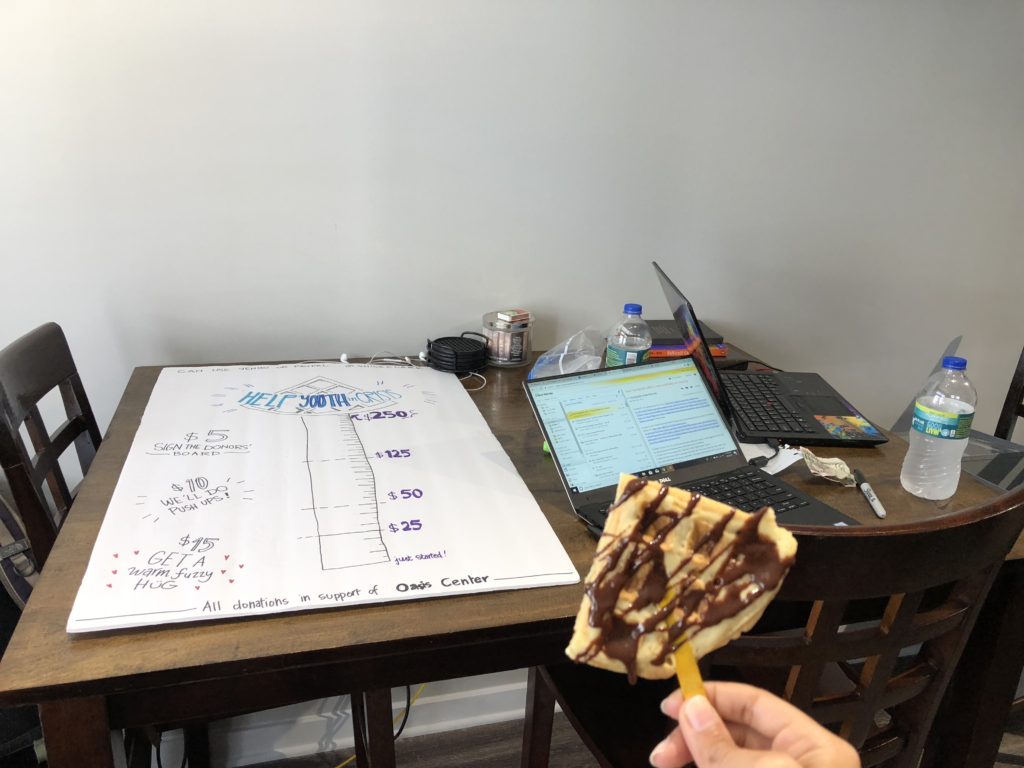
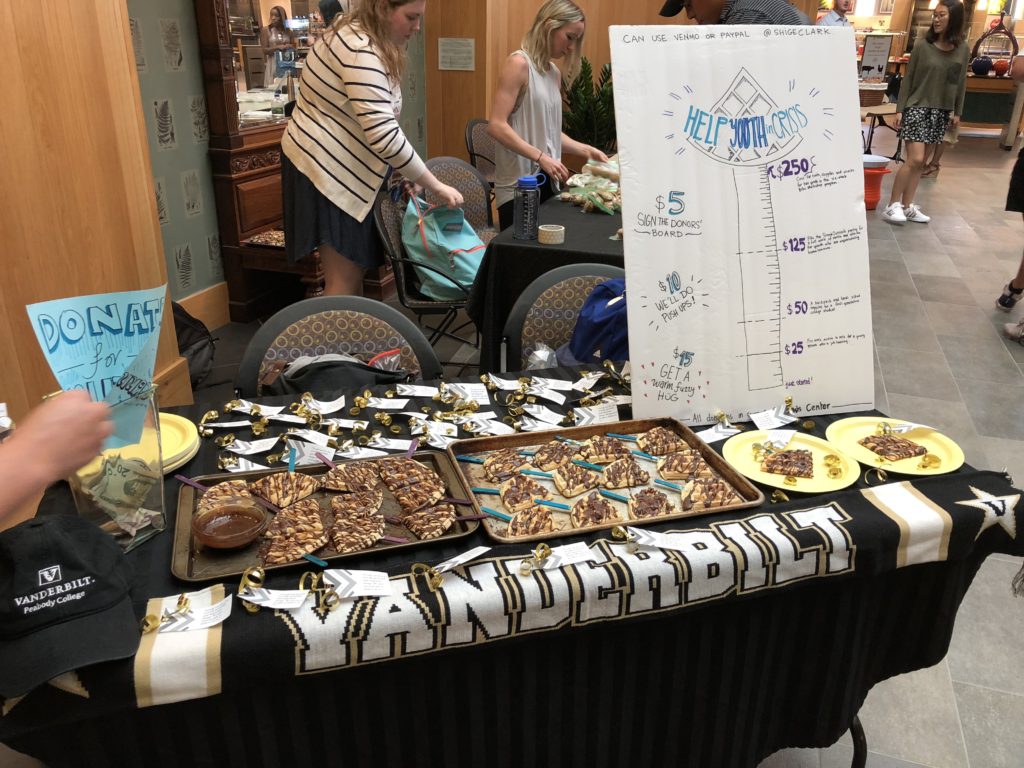
On the bake sale day, we spent the morning making waffles! Using a smaller waffle maker enabled us to make more waffles and we got 44 waffle pops in total. We had our made-with-love waffles and designed waffle stand ready. Students were happy to contribute to our charitable cause – in fact, many students donated without asking for a waffle pop, which meant cost-free revenue (AKA sweet sweet profit). Having our audience in mind, we recognized that students might not have cash in hand, so we set up a venmo account that contributed to 76% of our profits! That’s a well-thought of strategy, baby! [ Insight 3: Choose the right tools ]

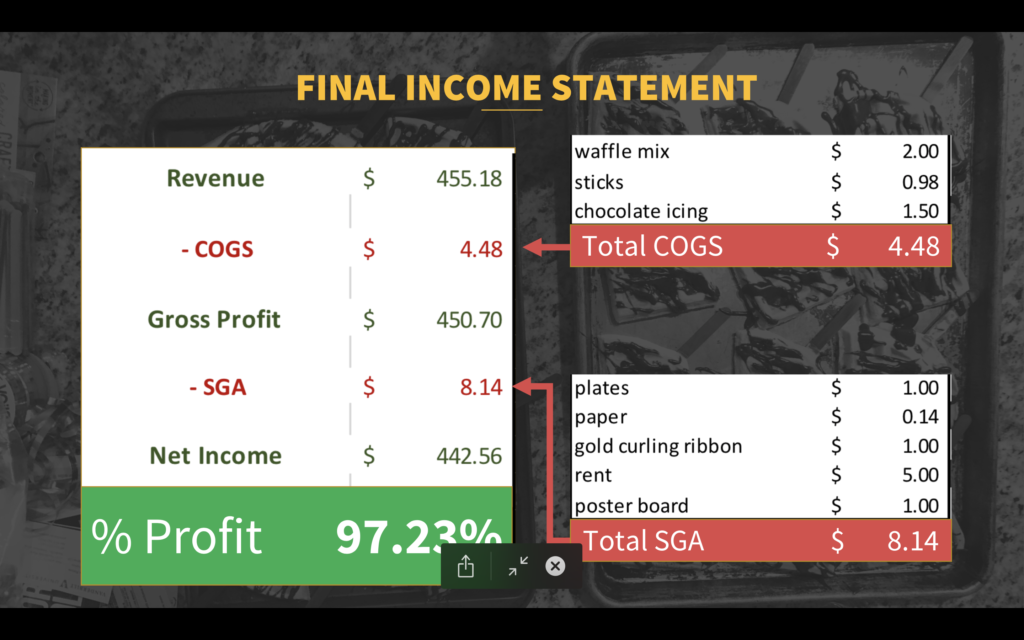
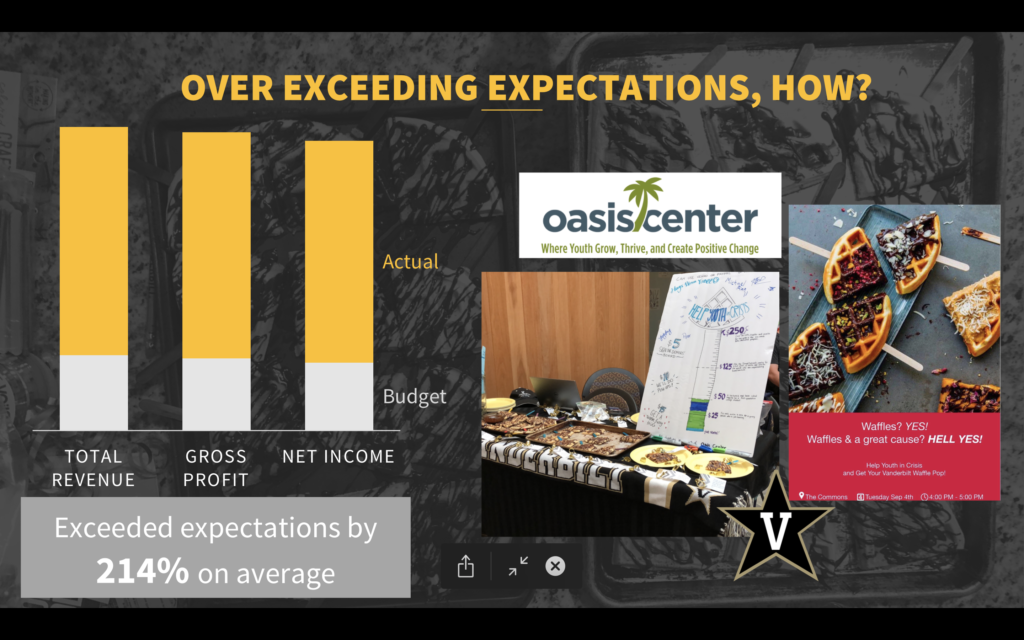
The waffle sale went really well, and my team won! Wohoo! While other teams made $25 on average, our waffles made a remarkable $442.56 of sweet, sweet, profit and a 97% profit margin. Back in the classroom, our professor pointed out an important point and I consider this our most important insight of the bake sale. All our choices were driven by increasing the profit margin, where the objective of our bake sale was to bring back our charities some sweet, sweet, profit. This means that our driving goal should have been the number of sweet dollars that are going to charity instead of the profit margin. [ Vital Insight – is what you’re tracking relevant to your overall goal? ]   

Just like a waffle bake sale, business is full of choices. It is vital to make the right choices and analyze the tough decisions. What is even more compelling is choosing the right metrics to track. Those metrics need to be directly and clearly relevant to your organizational goal, otherwise, you might be making your best efforts but your best efforts are not necessarily driving the organization’s best results. In the end, I learned a waffle lot from this bake sale!

743921e9-b6c2-4d10-b01e-445c5f723d01

Don’t call me colleague!

In a meeting room, we sat next to each other facing representatives of an external company. “This is my colleague, Zahraa”, my teammate introduced me as the meeting started. Amidst the business chatter, my mind wandered off echoing one word in my head: colleague. I didn’t like the sound of that word. It made me feel so alien to someone I, contrastingly, feel connected to. It sounded formal, dry and insincere.

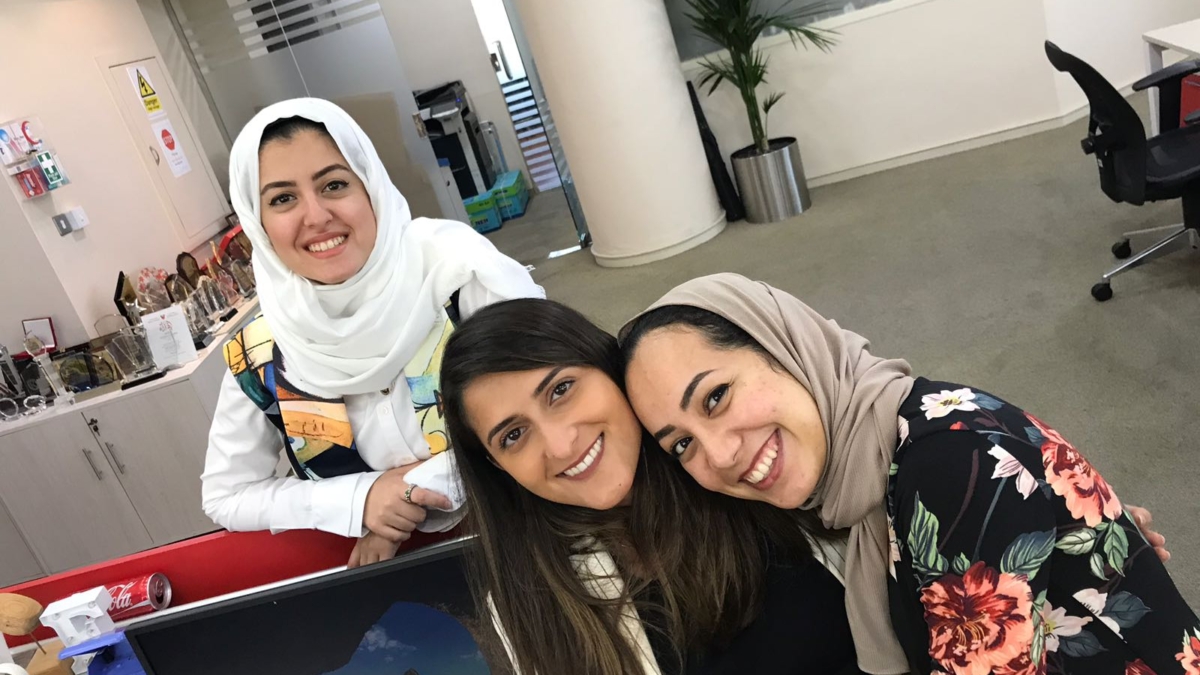
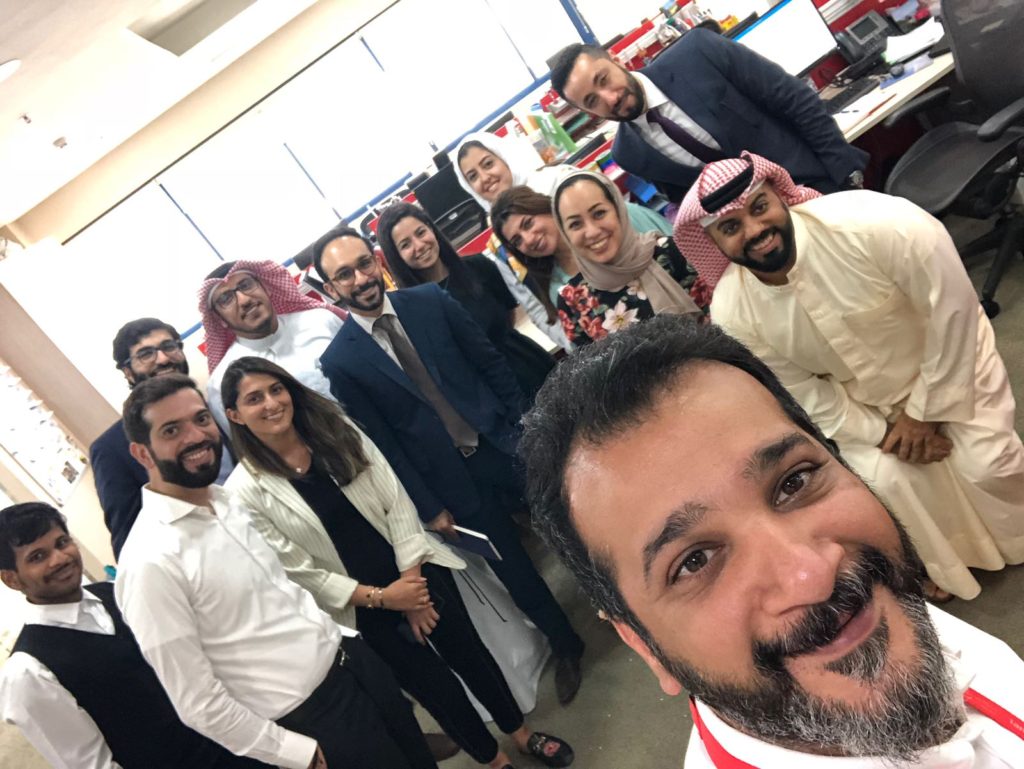
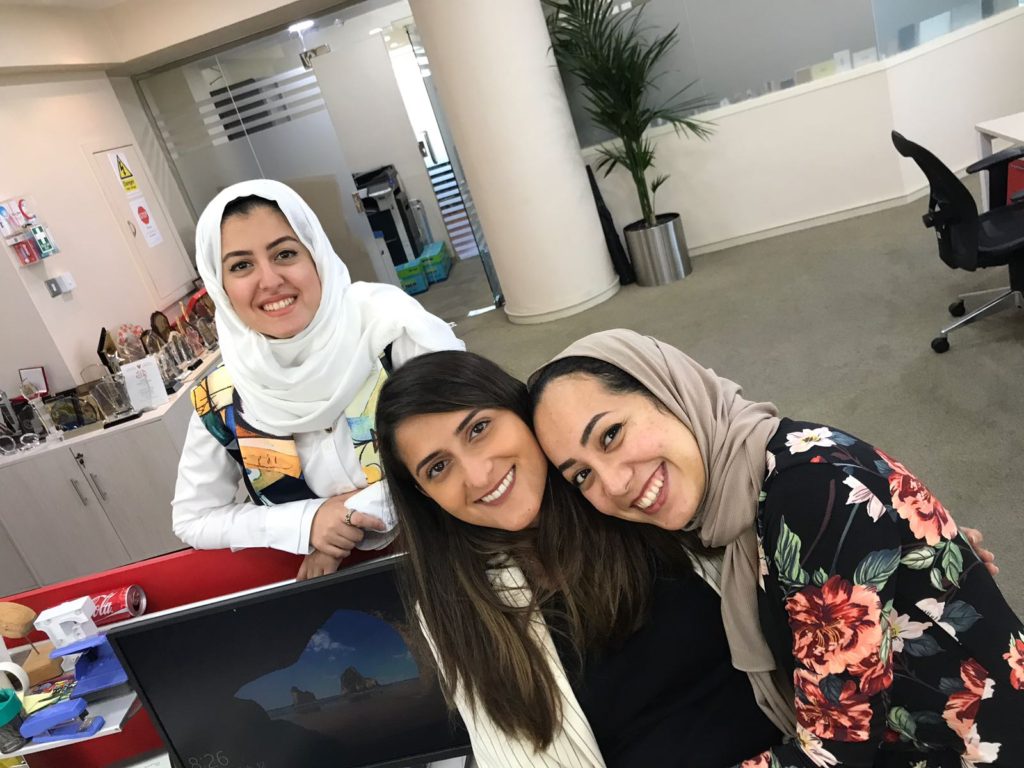
The next day, him and I accompanied by the rest of our team members and our boss, sat together in a team meeting. I truly enjoy those! I often sit back quietly while my head buzzes with ideas. I looked around and I found a group of amazing individuals, one common goal, and a shared drive towards creating impact. I saw a leader navigating through challenges towards one direction, and looking to impact the map of a whole country. I looked into the faces around the room, and I didn’t see any “colleague”. In fact, I didn’t see seven individuals, because they all melt together into one: a team. And THIS word, I like the sound of.

“Team” is not just a word. To me, it’s a feeling. It’s when we are all one, and when the whole is greater than the sum of its parts. When I look back at that meeting room, I find that personalities and behavioral styles of team members take a backseat when a supporting context, one compelling direction, and a shared mindset are set forth. That is when members are no longer merely “colleagues”, and instead, a “team” comes into being. So, hey, don’t call me colleague!

A wonderful team has inspired this. And it was written uncensored and unrevised on my last day at Tamkeen before I fly across the world for a new venture. Overwhelmed with a wave of emotions, but one thing is certain, they will hold a place dear to me because, hell, that’s my “team”! <3